
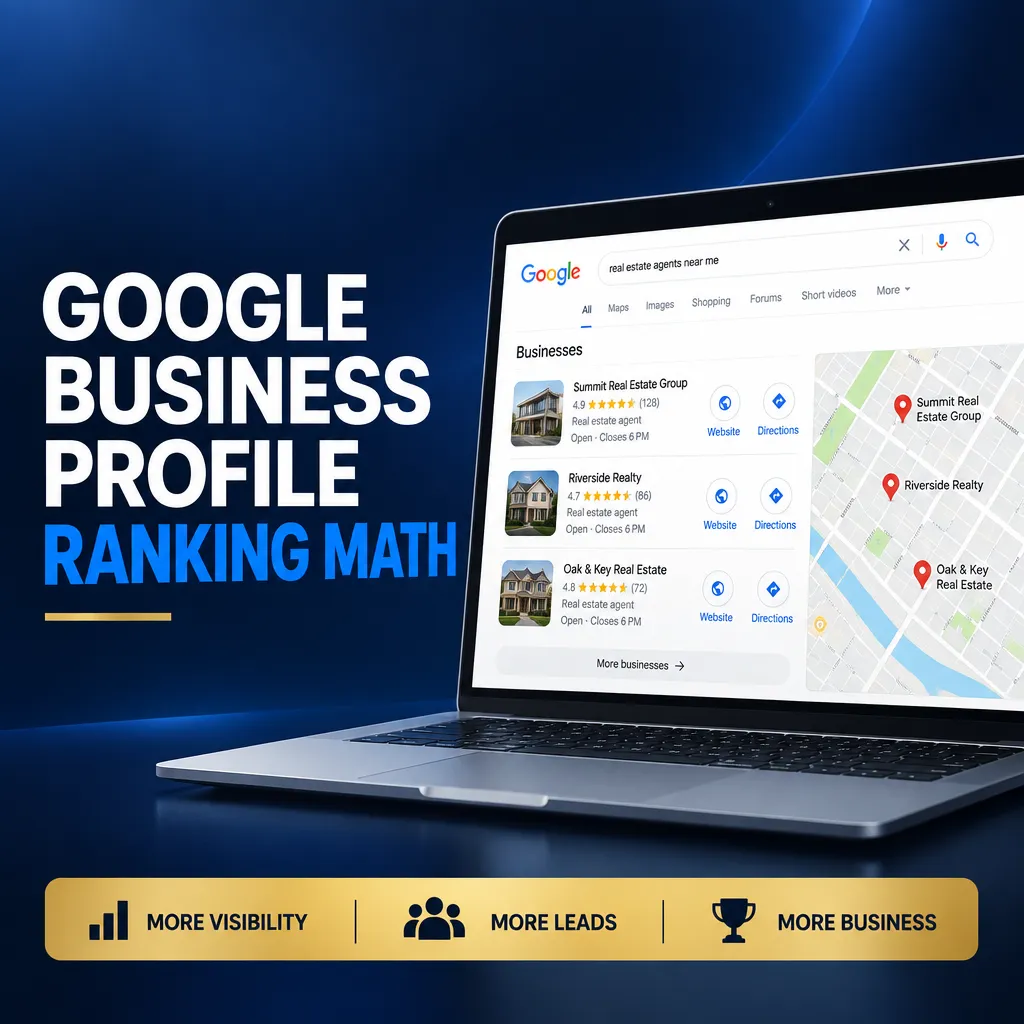
Google Business Profile for Real Estate Agents: The 32% You're Ignoring
Let me start with a number that should annoy you a little.
Roughly 32% of whether you appear in local search results comes down to your Google Business Profile. Reviews are another 20% or so. Add those two together and more than half of the decision about whether a seller three streets over ever sees your name is made in a free tool you probably set up once, years ago, in about nine minutes.
Nine minutes. Half the decision. And most agents have never gone back.
You're not the problem here. Nobody handed you this. You were taught to farm, door-knock, sphere, post, follow up. Nobody sat you down and said: the plumbing under your name is worth more than the wallpaper on your website.
Machines don't recommend the best agent
Machines don't recommend the best agent. They recommend the one they understand.
That sentence explains almost every ranking result you've ever been confused by. The 22-year veteran who can't be found. The four-year agent at the top of the map. Nobody sat in a room and weighed their careers. One profile could be read cleanly by a machine. One couldn't. That was the whole contest.
Ryan Comstock is the cleanest example we have. Twenty years in the business, moved from Seattle to Tucson, built up 250 Google reviews — and sat on page three while agents with about 50 reviews sat on page one. He described it himself: "I was confusing Google." His addresses and phone numbers didn't match across the internet. The machine couldn't tell which Ryan was the real Ryan, so it quietly left him out. After the fix: 20 sales and about $250,000 in year one, 24 online deals in 2025, and buyers arriving from Copilot and Claude.
Nothing about Ryan needed fixing. His plumbing did.
Two wallpapered walls
Picture two walls in a house, both papered the same. One has plumbing behind it. One has studs and air.
From the hallway they look identical. You only find out which is which when someone turns on a tap.
Your website is wallpaper. Beautiful wallpaper, maybe. Your Google Business Profile, your name, your address, your phone number, your reviews, your categories — that's plumbing. When a seller types four words into their phone at nine o'clock at night, they're turning on a tap. The wall with nothing behind it stays quiet.
Where the 32% actually goes
"Optimize your profile" is useless advice, so here is what the 32% is actually made of, in the order it pays.
1. One name, one address, one phone number — everywhere
Something like 74% of businesses get excluded from local results because of mismatched name, address, and phone details across the web. Not penalized. Excluded. Left out of the shortlist entirely.
You have accumulated versions of yourself: the brokerage directory, the old team page, Zillow, Realtor.com, the Facebook page you made in 2019, the chamber listing with your old cell number. Think of four mailing addresses for the same person. A careful sender doesn't guess. He picks the one he's sure about — and that isn't you.
Pick one exact format of your name, your address, your phone. Write it down. Make every other listing on the internet match it, character for character. This single job outranks everything else on this page.
2. Categories, service areas, and the boring fields
Primary category is a lever, not a label. "Real estate agent" behaves differently from "real estate agency," and the wrong pick quietly removes you from queries you'd otherwise win. Then: hours filled in, a secondary phone number, service areas that match the towns you actually sell in — not the six counties you'd accept a check from.
Sprawling service areas make you blurry. Blurry means unrecommendable.
3. Reviews — the other 20%, and the part everyone does wrong
Volume isn't the whole story. Recency, cadence, and your replies are part of it too. Twelve reviews from 2021 read as an agent who used to sell houses.
One ask a week is the whole discipline. That's it. Grace Globus went from no profile at all to 120 reviews in six to eight months in Santa Monica and Beverly Hills — not from a campaign, from asking every week. Eric Torres in Arlington went from hardly any reviews to 200, then 300, then 400, and started getting come-list-me calls from people he'd never met.
And reply to every review, in words a human would use. Your replies are text a machine can read about what you do and where you do it.
4. Photos, posts, and proof of life
A profile that hasn't been touched in eight months looks abandoned. Listing photos, sold shots, a short weekly post about the market you serve. Not because posts rank — because activity signals a business that exists.
None of these four are clever. That's the point. This is plumbing work, and plumbing work is boring and decisive.
"But I already have a great website"
Good. Keep it. A strong site is where your credibility lands once someone is already looking for you, and it's how AI engines read your story in your own words — that's the job of your website and your content, and it matters.
But it isn't the shortlist. The shortlist is built somewhere else, by a machine reading your profile, your consistency, and your reviews, before your website ever gets a click.
You already choose every professional this way. It was never the best plumber who got your call. It was the one you could see.
What this looks like next spring
It's April. Kitchen table three streets over, laptop open between them. She types four words. The answer names two or three agents, and yours is one of them, with 180 reviews under it and hours and a phone number that are the same everywhere she's ever seen you.
She reads a little. She says, "This one seems good." By the time your phone rings tomorrow morning, she has already decided.
Sellers call you. Not you calling sellers.
Where to start this week
- Write down one exact name, address, and phone format. Fix your five biggest listings to match it.
- Check your primary category and your service areas. Narrow them to where you actually sell.
- Ask one client for a review. Then do it again next week, and the week after.
- Reply to every review you have, in plain language.
That's a few hours of unglamorous work against roughly half of the local ranking decision. Later is not a decision — every month you wait is a month of head start for the agent whose profile a machine can already read.
If you want to see exactly where your own plumbing is leaking, we run a free AI visibility audit on your name and market and show you what the machines currently think you are. No presentation, no pitch deck — just the gaps, in order.
Frequently asked questions
How much does a Google Business Profile really matter for real estate agents?
Profile signals account for roughly 32% of local ranking and reviews for roughly another 20%. Together that's more than half of whether you appear when someone searches for an agent near them — which is why a nine-minute setup from years ago is usually the most expensive thing on an agent's marketing list.
Why do agents with fewer reviews outrank me?
Usually because their information is consistent and yours isn't. Around 74% of businesses are excluded from local results over mismatched name, address, and phone details. Ryan Comstock had 250 reviews and sat on page three behind agents with about 50, purely because his addresses and phone numbers disagreed across the web.
How many Google reviews does an agent need?
There's no magic number, but pace beats volume. One review ask per week, every week, is the discipline that works. Grace Globus went from no profile to 120 reviews in six to eight months; Eric Torres passed 200, 300, then 400 and began getting listing calls from strangers.
Should I reply to Google reviews?
Yes, to all of them, in normal human language. Replies show an active business and they add readable text about what you do and where you do it — the exact thing an AI engine needs in order to describe you to a seller.
Do I still need a website if my profile is strong?
Yes. The profile gets you onto the shortlist; your website and content are how an AI engine learns your story, your market, and your track record in your own words. One builds visibility, the other converts it.
Want the four fixes done for you? Get a free AI visibility audit or book a call.
Related reading: The listing you never knew you lost
Related reading: Solo Agent vs. Big Team: Who AI Actually Recommends