ChatGPT, Claude, Gemini, Perplexity: Do Real Estate Agents Need a Plan for Each AI?
A year ago you heard about ChatGPT. Then a client mentioned Gemini. Someone at the office swears by Perplexity. Your nephew uses Claude for everything. Your phone has Siri, your laptop has Copilot, and now there's Grok.
And a quiet worry sets in. If sellers are asking all of these, do you need a plan for each one? Six tools. Six sets of rules. Six things you'll never get to. Am I close?
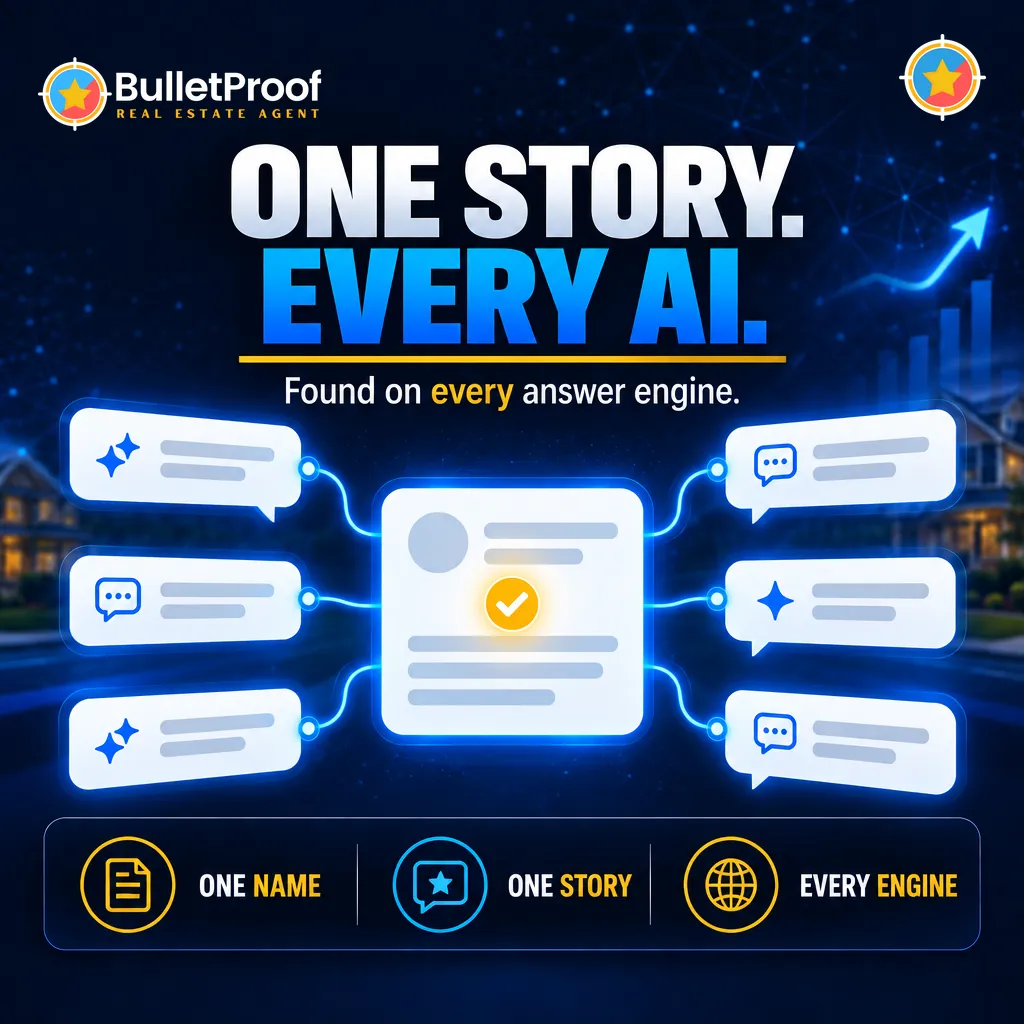
Take a breath. You don't need six plans. You need one story, told clearly, in the places all of them read.
Video transcript: I'm probably getting a call like every week now. I'm like, "How'd you find me?" They're like, "Gemini, Grok, or ChatGPT." That's what happens when ChatGPT actually knows who you are. I'm like, great. It's been great. It really has been, for sure. What you're doing for me is amazing, so I want to sincerely appreciate and thank you for this. Sellers call you, not you calling sellers. JoinBulletProof.com, where sellers call you. And we'll see you at the top.
The short answer
No, you don't need a separate plan for every AI tool. ChatGPT, Claude, Gemini, Grok, Perplexity, Copilot and other AI tools all build their answers from what they can find and trust about you on the open web: your website, your Google profile, your reviews, your directory and social profiles, and what others publish about you. They weigh those sources differently, so the answers differ. But the work that gets you named is the same work for all of them.
AI doesn't pick the best agent. It picks the agent it can understand. Every engine is trying to understand you from the same pile of evidence.
Sellers already use more than one
This isn't a prediction. It's what our clients hear on the phone.
Peter is an associate broker in State College, Pennsylvania. Here is how he described his calls: "I'm probably getting a call like every week now. And I'm like, how'd you find me? They're like, Gemini, Grok, or ChatGPT."
Three different tools. Same agent. Same result.
Kurt sells in Nevada City and Grass Valley, California. On a call with our team in September he said: "I had a listing appointment a week ago or so, and I didn't know the guy, and I asked him how he found me, and he said he found me on Claude." Then he added: "he's a techie guy, and he said he doesn't even use Google anymore."
Ryan Comstock spent 20 years in the business and once sat on page three with 250 reviews. After we fixed his mismatched contact details, buyers started finding him through Copilot and Claude. And Lisa, a RE/MAX agent in Wentzville, Missouri, had a seller find her on ChatGPT.
None of them built a plan for one engine. They built one clear record, and several engines read it.
Now flip it around. Somewhere in your town tonight, a seller is asking one of these tools who to call. If the answer names someone else, you will never hear about it. Nobody calls to tell you they picked someone else. The loss doesn't show up in your numbers. It just quietly isn't there.
That's the real cost of waiting to see which tool wins. It isn't one engine you miss. It's every engine that reads the same thin record and moves on to the agent it can explain.
Why the answers still differ from tool to tool
If every tool reads the same web, why does one name you and another doesn't? Because each one gathers and weighs sources in its own way.
Some lean on a search index. ChatGPT search can use Bing, which is why Bing matters for ChatGPT. Google's AI answers are built on Google Search. Others pull heavily from portals, directories and review sites. In our own checks, when we run the same agent through Google AI Mode, Gemini and ChatGPT, the answers often cite different sources, and portal and directory profiles show up again and again. That is why your directory profiles should say the same thing as your website.
Think of it like six friends asked to recommend a plumber. Each one remembers different things. One saw the truck. One read the reviews. One heard about him from a neighbor. If all six remember the same name, it's because that plumber showed up the same way everywhere.
What does not change from engine to engine
Google says this plainly for its own AI answers. In its words, there are no additional requirements to appear in AI Overviews or AI Mode, nor other special optimizations necessary. You can read it on Google's own page about AI features and your website. The other tools aren't identical, but the base they reward is the same:
A website that says who you are, where you work and what you do
Plain sentences a machine can quote. Your name, your towns, the kinds of sellers and buyers you help, and the questions they ask.
A Google profile and reviews that match it
Steady reviews with real words in them. The same name, phone number and address as your site.
Profiles everywhere that tell the same story
Portals, directories, social profiles, your brokerage page. When they agree, every engine gets more confident. When they disagree, every engine gets more careful.
Things other people publish about you
Press releases, local articles, interviews, forum mentions. Independent sources are how an engine checks that you are who you say you are.
What we tell our clients about all these AI tools
Here is our own view, the same thing our team says on client calls. Don't chase the tool. Build the record every tool reads.
- One story, everywhere. We keep your core details matched across 50+ online profiles, including maps and AI assistants, so no engine finds two versions of you.
- Check more than one engine. When we review a client, we look at Google, Google AI Mode, Gemini and ChatGPT, and we read which sources each answer leans on, not just whether your name shows up.
- Fix the source, not the answer. If an AI tool gets you wrong, the fix is almost always a profile or page it read, not a trick inside the tool.
- Ask every new caller how they found you, and write it down. Our clients are hearing Gemini, Grok, Claude and ChatGPT by name.
- Hold the standard: one new review a week, and replies within 48 hours. Every engine reads your reviews.
Who this is for, and who it isn't
This is for agents who feel buried by every new AI headline and want one plan they can actually keep. It isn't for anyone looking for a trick that games one tool for a month. Those tricks fade. A clear record keeps working as new tools arrive.
It also takes time. Six to twelve months to full strength is the honest number. You can find more stories like Peter's and Kurt's in our case studies. Want to see what these tools say about you today? Get a free AI visibility audit.
The bottom line
New AI tools will keep showing up. You can't learn the rules of every one, and you don't have to. Later is not a decision, though. While you wait to see which tool wins, the agent across town is already the name all of them repeat.
AI doesn't pick the best agent. It picks the agent it can understand. Picture next spring. A seller asks Claude. Her husband asks Gemini. Her daughter asks ChatGPT. All three hear your name, and by the time your phone rings, the decision is already made. Sellers call you. Not you calling sellers.
Frequently asked questions
Do I need a different strategy for ChatGPT, Claude, Gemini and Perplexity?
No. They weigh sources differently, but they all build answers from what they can find and trust about you online: your website, Google profile, reviews, directory and social profiles, and what others publish about you. One clear, consistent record serves all of them.
Why does one AI tool recommend me and another doesn't?
Each tool gathers and weighs sources in its own way. Some lean on a search index, others on portals, directories and review sites. Matching profiles everywhere make every engine more confident.
Does Google require anything special for AI Overviews or AI Mode?
Google says there are no additional requirements to appear in AI Overviews or AI Mode, nor other special optimizations necessary. The same SEO basics apply.
Are sellers really finding agents through Gemini, Grok and Claude?
Yes. Peter, an associate broker in State College, Pennsylvania, gets callers who name Gemini, Grok or ChatGPT, and Kurt in Nevada City, California, had a seller find him on Claude.
How long does it take to show up across AI tools?
Plan on six to twelve months for full strength. The record you build keeps working as new AI tools arrive.