Land and Acreage Sellers: How They Find a Real Estate Agent on Google and AI
Picture an owner with twenty years on a piece of land. A house, a barn, some fence line they put up themselves. Maybe it was a hobby farm. Maybe it was just room to breathe.
Now it's time to sell. And they have a worry most home sellers don't. Will the agent they hire actually understand land?
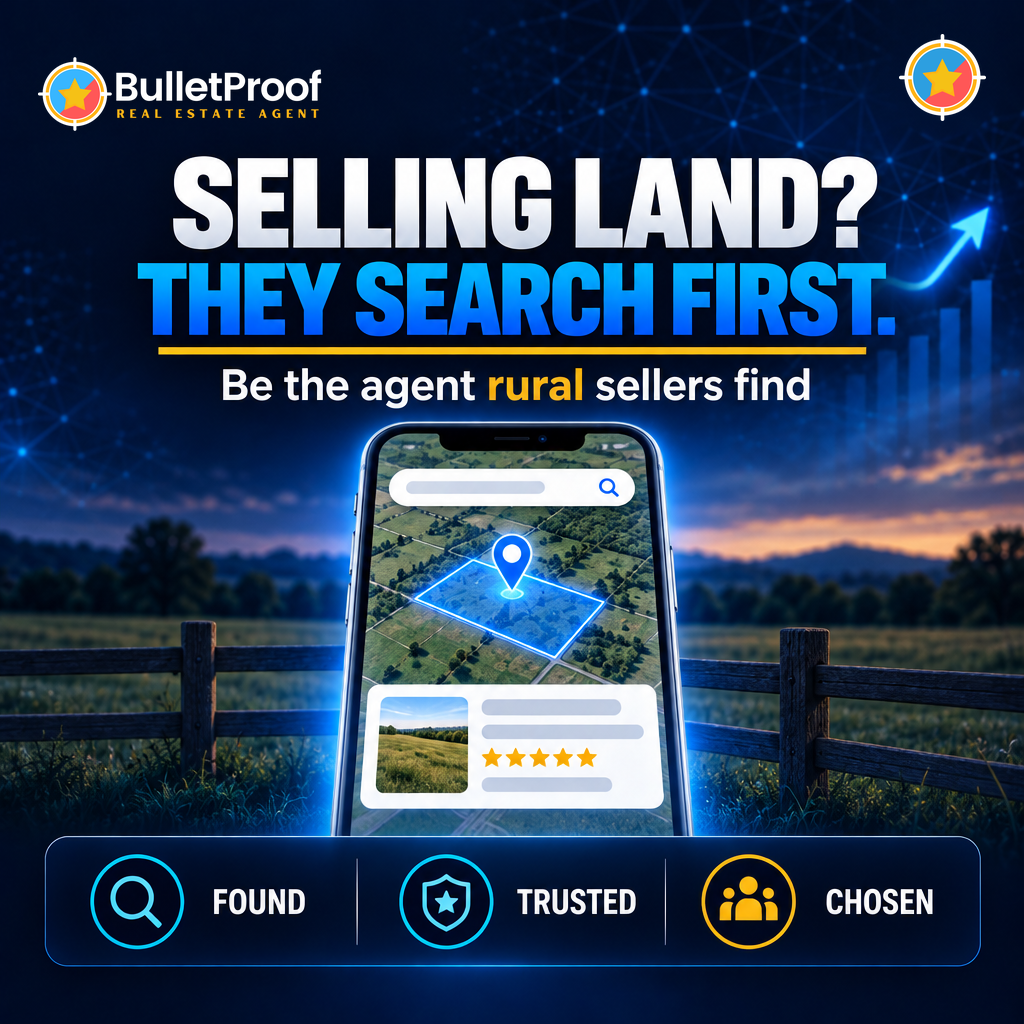
So they don't call the first name on a postcard. They search. They type "land realtor" and their county into Google, or they ask ChatGPT, Gemini, Claude, Perplexity, Copilot and other AI tools who sells acreage near them. Am I close?
Why land sellers search differently
Selling land isn't the same as selling a house in a subdivision. The owner knows it. They have questions about access, utilities, wells, boundaries and who the buyers even are.
That makes them careful. They want an agent who has done this before, nearby, on property like theirs. A strong brand in town doesn't help much if nothing online says you sell land.
And rural searches are wide. A seller might search the county, the nearest small town or the road they live on. If your website only talks about one city, you may not show up for any of those. AI doesn't pick the best agent. It picks the agent it can understand.
What this looks like for real agents
Kelli sells in Parker County, Texas, around Weatherford and Poolville, where she lives with her family on a small hobby farm. On her case study she says: "Since then, I have closed eight deals just from people searching real estate agent in Parker County."
Notice the search. Not a big city. A county. That's how people in rural areas describe where they live, and it's how they search for an agent.
Video transcript: I asked her, How did you find me in Parker County, Texas, of all places? And she said she asked ChatGPT, and I was the first name that came up. So after that call, it was kind of a huge wow moment. I mean, you expect calls from your referrals, your Google, but never AI. So it was a huge pivoting moment for me knowing that BulletProof is doing what they say they are doing. Joinbulletproof.com, where sellers call you. And we will see you at the top.
Kelli also told us about a client who surprised her. She asked, "How did you find me in Parker County, Texas, of all places?" In Kelli's words, "she asked ChatGPT, and I was the first name that came up." You can read her full story in Kelli's case study.
Stacey works the Montgomery and Conroe area of Texas. On one of our calls she mentioned, almost in passing: "And I have a listing tomorrow on five acres from ChatGPT."
A land seller asked an AI tool, and an agent with a clear online story came up. That's the pattern. The seller decided before the first conversation.
To be fair about it: most of the stories we hear from clients are about homes, not raw land. We'd rather show you two real ones than invent a dozen.
What Google says about covering a wide area
Many land agents cover a lot of ground. Google's Business Profile help page on service areas is clear about the limits: "You can have up to 20 service areas." It also says your overall area shouldn't be more than about two hours of driving time from where your business is based.
And one more line worth taping to your desk: "When you set your service area, be as specific and accurate as possible." For a rural agent, that means naming the counties and towns you really serve, not every place you'd be willing to drive. You can read the full guidance on Google's page about managing service areas.
The land listing that went to someone else
Think about the last farm or acreage listing that sold near you with another agent's sign on it. You know those roads. You may know the family. But when they searched, someone else had a page about land and you didn't.
Nobody calls to tell you they picked someone else. If that's happened, nothing about you is broken. You know how to sell rural property. Google and AI just couldn't see it yet.
How to be the agent land sellers find
1. Say it plainly on your website
If you sell land, acreage, farms or ranches, say so in your own words. Describe the property types and the questions you help with. A page per county or area works far better than one line in your bio. Our guide to niche search pages explains why specific pages win specific searches.
2. Build pages for the places people name
Rural sellers name counties, small towns and areas, not neighborhoods. Write a page for each one you truly serve. Our post on neighborhood pages shows the format, and it works just as well for a county.
3. Ask land clients for reviews that say land
A review that mentions the acreage, the well or the long driveway tells the next seller you've done this before. Here is the number we hold to: one new Google review a week.
4. Match your details everywhere
Your name, phone, service area and specialty should read the same on your website, your Google profile and every directory. Then show your land sales, with photos, so your expertise is visible and not just claimed.
What we tell our clients about land and acreage
Here is our own view, the same thing we tell the agents we work with.
- Your experience is your brand. Years on rural property are a real advantage. Make sure sellers can see them online, not just hear about them at the feed store.
- Name the county. Rural buyers and sellers search by county and small town. Your pages should use the same words they do.
- Small towns can win. A local agent who is clearly about one area can outrank a big brokerage that is vaguely about everywhere. Our post on how a small-town agent can outrank a big brokerage goes deeper.
- Keep the story matched. We keep your name, phone and address the same across 50+ online profiles, including maps and AI assistants, so a seller who searches finds one clear agent.
- Be patient. Full strength takes six to twelve months. Our guarantee is page 1, the top 20 agents in your market, within 12 months. We never promise a number of deals.
Who this is for, and who it isn't
This is for agents who already sell land or rural property and want the sellers to find them first. It fits agents with real experience on acreage who aren't showing up when owners search their county.
It isn't a way to look like a land expert if you're not one. Sellers can tell, and so can the reviews. Start with what you have really sold, and a website built to be read. To see how Google and AI read your site today, get a free AI visibility audit.
The bottom line
Land sellers are careful, and careful people search. They look for an agent who clearly knows their county and their kind of property. Be the one whose name and experience they can find.
AI doesn't pick the best agent. It picks the agent it can understand. Picture next spring. An owner with forty acres types four words at the kitchen table, finds your page about land in her county and reads a review about a long gravel driveway. By the time your phone rings, she has decided. Sellers call you. Not you calling sellers.
Frequently asked questions
How do land sellers find a real estate agent?
Many search Google for a land or acreage agent in their county, or ask AI tools like ChatGPT. They read reviews and websites before calling anyone.
Should a land agent have separate pages for each county?
Yes, if you truly serve each one. Rural sellers often search by county or small town, so a page for each area matches how they search.
How many service areas can I list on my Google Business Profile?
Google allows up to 20 service areas and says your overall area shouldn't be more than about two hours of driving time from where your business is based.
What should a land agent's reviews say?
The best ones mention the property type, like acreage, a farm or a well, so the next seller can see you have done this before.
How long does it take a land agent to show up on Google and AI?
Full strength usually takes six to twelve months of steady work on your website, profile and reviews.