
Contact us
Have a question? Connect with the BulletProof team to learn more about tools and strategies for long-term visibility.
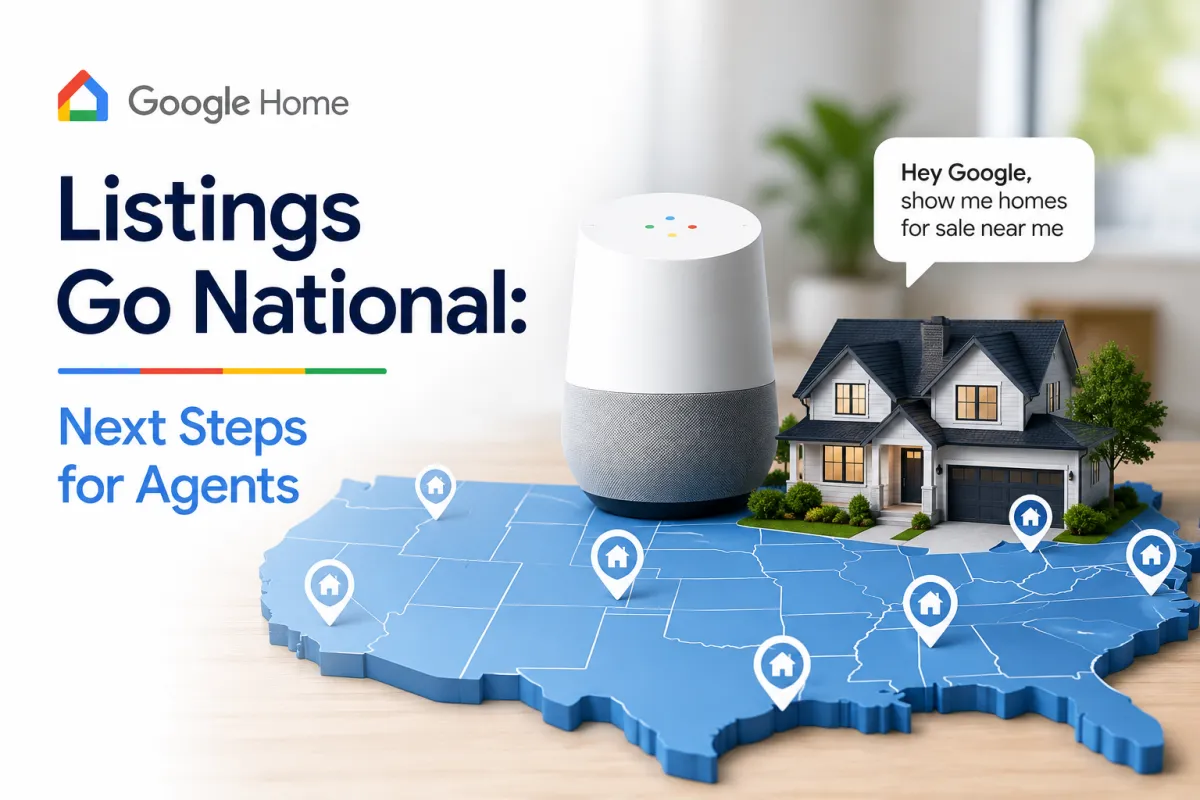
Google Home Listings Go National: Next Steps for Agents
Real Estate, Lead Generation, Google Home Listings
Google Home Listings Just Went National: What Smart Agents Do Next
Google has quietly made one of the biggest shifts in online home search since the rise of the portals. With the nationwide rollout of Google Home Listings in 2026, buyers can now discover properties, view details, and contact an agent directly—all without ever leaving the search results page. For real estate agents, this is more than a tech headline. It is a fundamental change in where buyers start and how they connect with you.
What Exactly Is Google Home Listings—And What Changed in 2026?
Google Home Listings, officially part of Google’s Home Listings Ads, integrates MLS-powered properties straight into Google Search, especially on mobile. When a consumer types something like “homes for sale near me”, they now see rich property cards with photos, price, beds/baths, and neighborhood details pulled directly into the results page, as reported by Real Estate News and others in mid-2026 (realestatenews.com).
After piloting in eight major markets in late 2025—including Chicago, Miami, Austin, and the Bay Area—Google expanded the experience nationwide in June 2026. Today, buyers in all 50 states can see these enhanced results as part of Google’s Local Services Ads (LSA) ecosystem (webanditnews.com). The key difference from traditional organic results or portals is that these cards are designed for immediate action, not just browsing.
How Google Is Handing the Phone Straight to Agents
For years, portals have positioned themselves between you and the consumer. Google Home Listings flips that script. Each listing card prominently features the local agent and includes clear buttons to call, message, or schedule a showing directly from the search result. No extra clicks, no detours through a third-party profile page—just a direct line from buyer to agent within the Google interface (support.google.com).
Because this sits inside Google’s Local Services Ads model, you are not paying for impressions. You pay only when a real lead comes in—when someone actually calls, sends a message, or books an appointment. In other words, Google has created a high-intent, pay-per-lead channel that starts where nearly every buyer already begins: the search bar on their phone.
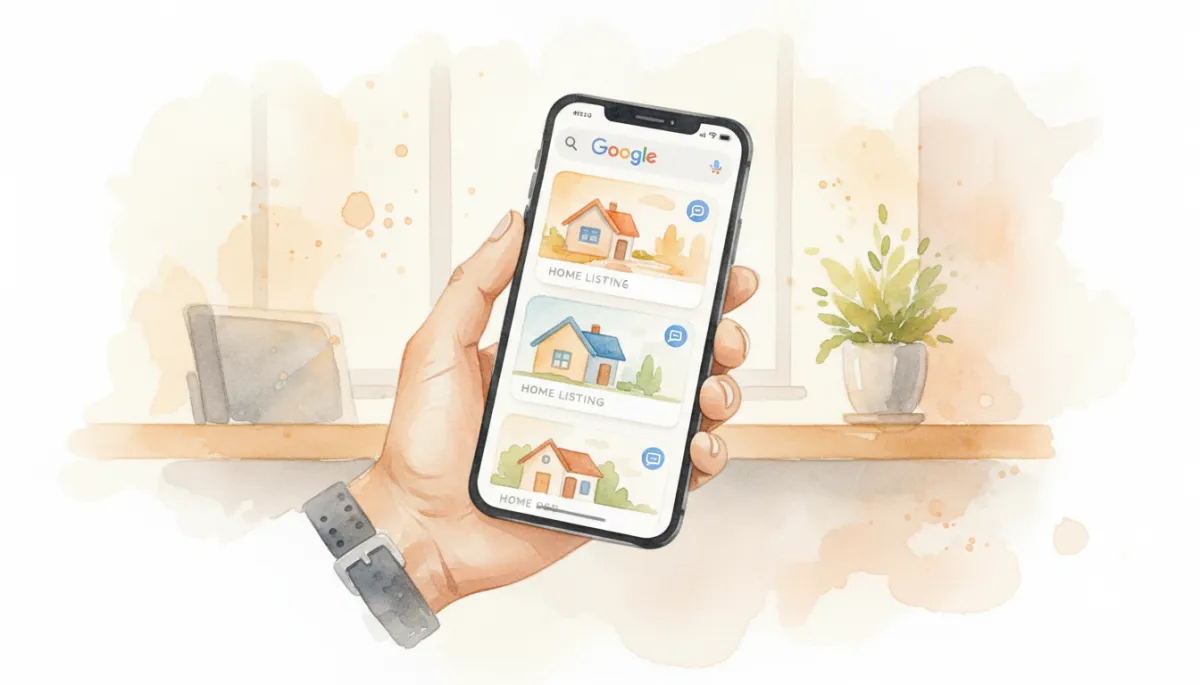
Direct call and message buttons turn casual searchers into live leads in seconds.
Where the Listings Come From: MLS Data via HouseCanary’s ComeHome
Google is not scraping random websites for this inventory. The listings are powered by MLS data delivered through HouseCanary’s ComeHome platform. ComeHome already offers robust home search tools with approximately 93% coverage of active MLS listings nationwide, alongside highly accurate valuations and neighborhood data (housecanary.com).
In practice, that means your listing details, photos, pricing, and status are flowing from your MLS to HouseCanary, and then into Google’s Home Listings cards. Early coverage has been driven by MLSs such as California Regional MLS and San Diego MLS, with HouseCanary actively inviting more MLSs and brokers to participate (realestatenews.com). The more your MLS leans in, the more visible your listings can become on Google.
Why Being on a Participating MLS Is Now Mission-Critical
If your MLS is not feeding data to HouseCanary and Google, your listings may simply not appear in this new experience. That means when a buyer in your area searches “homes for sale in [your city]”, they may see a curated set of properties that doesn’t include yours, even if your listing is active and well-priced. In a world where Google dominates consumer attention, that is a serious blind spot.
As an agent, you can’t directly “upload” a listing to Google Home Listings. Your leverage point is your MLS. This is the time to:
Confirm whether your MLS is already participating in the HouseCanary/Google program.
Advocate through MLS committees or leadership to opt in if they are not yet involved.
Understand any broker-level opt-in choices that may affect your office or brand.
Accurate, Complete Listings Matter More Than Ever
When your listing appears on Google, you often get only one compact card to make an impression. That card pulls directly from the MLS: photos, price, beds/baths, square footage, and sometimes neighborhood and school information. Sloppy data or rushed input now costs you visibility and conversion, not just in the MLS and portals, but at the very top of the buyer funnel—Google Search itself.
To fully leverage this new channel:
Invest in photography. High-quality, well-lit images are what stop a thumb scroll. Dark or crooked photos will get skipped instantly in a card-based layout.
Complete every field you can. Square footage, lot size, HOA details, school district, and features (garage, pool, upgrades) all help buyers self-qualify and feel confident enough to tap “call” or “schedule.”
Keep pricing and status current. Because the data feed is automated, stale price changes or delayed status updates can create a poor experience and damage your credibility with both buyers and Google leads.
💡 Pro Tip: Treat your MLS listing as the “master record” for every channel—including Google. A 10-minute accuracy check before going live can pay off in dozens of higher-quality inquiries.
What to Tell Your Sellers About Google Home Listings
Sellers are hearing bits and pieces about Google showing homes directly in search, and many don’t yet understand what it means. This is your chance to lead the conversation and position yourself as the expert on where buyers actually start their journey. Here are talking points you can use in listing presentations and update calls:
Explain the shift: “In 2026, Google rolled out Home Listings nationwide. When buyers search ‘homes for sale’ on their phone, they now see real-time listings right in Google, with an option to call or message the listing agent instantly.”
Connect it to your marketing plan: “Because I list your home in a participating MLS and maintain complete, accurate data, your property is positioned to show up where buyers are already searching—Google, the first place most people go.”
Highlight direct connection: “When someone sees your home on Google, they can contact me directly to schedule a showing. There’s no middleman reselling the lead.”
Framing it this way reassures sellers that you are not just putting their home in the MLS and hoping for the best. You are making sure their property is visible at the exact moment buyers start searching—often before they ever reach a portal or a brokerage site.
Threat or Opportunity? How to Read This Shift as an Agent
Any time a major platform steps deeper into real estate, the industry asks the same question: is this a threat to agents, or an opportunity? With Google Home Listings, the honest answer is: it can be either, depending on how you respond.
The threat: If you ignore this development, Google will still surface listings—just not necessarily yours. As Google captures more early-stage search traffic, agents who rely solely on portal leads or organic website traffic may see diminishing returns, especially as zero-click search and AI Overviews reduce click-through rates (inman.com).
The opportunity: For agents who lean in, this is a rare chance to meet buyers at the very top of the funnel, with clear attribution and direct contact options. You are not fighting to stand out among portal ad placements; you are presented as the local expert attached to the listing the consumer is already interested in.
In short, Google is not trying to be the agent. It is trying to be the starting point. Your job is to make sure that when buyers start there, they still end up with you.
Actionable Steps to Get Ready for Google Home Listings
Turning this shift into a lead-generation engine requires more than awareness. Here are practical steps you can take over the next 30–60 days:
Audit your MLS participation. Confirm whether your MLS is already feeding data to HouseCanary’s ComeHome platform for Google Home Listings. If not, raise the issue with leadership and ask what it would take to participate.
Upgrade your listing input process. Create a pre-listing checklist that ensures photography, descriptions, and all key fields are complete before you hit “submit” in the MLS. Remember: whatever you put there is what buyers see on Google.
Claim and optimize your Google presence. Make sure your Google Business Profile is fully built out with accurate contact info, service areas, and reviews. When a buyer hits “call” or “message,” you want that experience to align with a strong, professional Google footprint.
Prepare for Local Services Ads. Explore Google’s Local Services Ads for real estate professionals in your market. Understand the verification process, budgeting options, and how leads are delivered so you can switch on campaigns strategically once you see traction from Home Listings.
Update your seller presentation. Add a dedicated slide or section explaining how their listing can appear on Google Home Listings, and how your process maximizes that exposure. This is a compelling differentiator against agents who still talk only about “MLS and Zillow.”
Be Visible Where Home Sellers and Buyers Are Already Searching
The common thread through all of this is simple: visibility where the search starts. Buyers type their first query into Google. Sellers often do the same when researching agents, pricing, or “how to sell my house.” Google Home Listings doesn’t replace your brand or your expertise—it amplifies them when you are plugged into the right data feeds and prepared to respond quickly to high-intent leads.
Agents who understand this shift and adapt their listing practices, MLS strategy, and marketing conversations will be the ones taking those calls, messages, and showing requests directly from Google. Those who don’t will watch from the sidelines as others step into that visibility.
Ready to Get Found Where Home Sellers Are Searching? Book a Strategy Call.
You do not have to figure this out alone. If you want to:
Clarify how Google Home Listings works in your specific market,
Tighten your MLS listing process so your properties stand out on Google, and
Build a simple, repeatable plan to attract both buyers and sellers from Google,
then now is the time to act. As a BulletProof member, you not only get hands-on support with Google’s Local Services Ads (LSA) as part of your membership, you also plug into the industry’s leading organic, AI-driven visibility and conversion system for real estate agents.
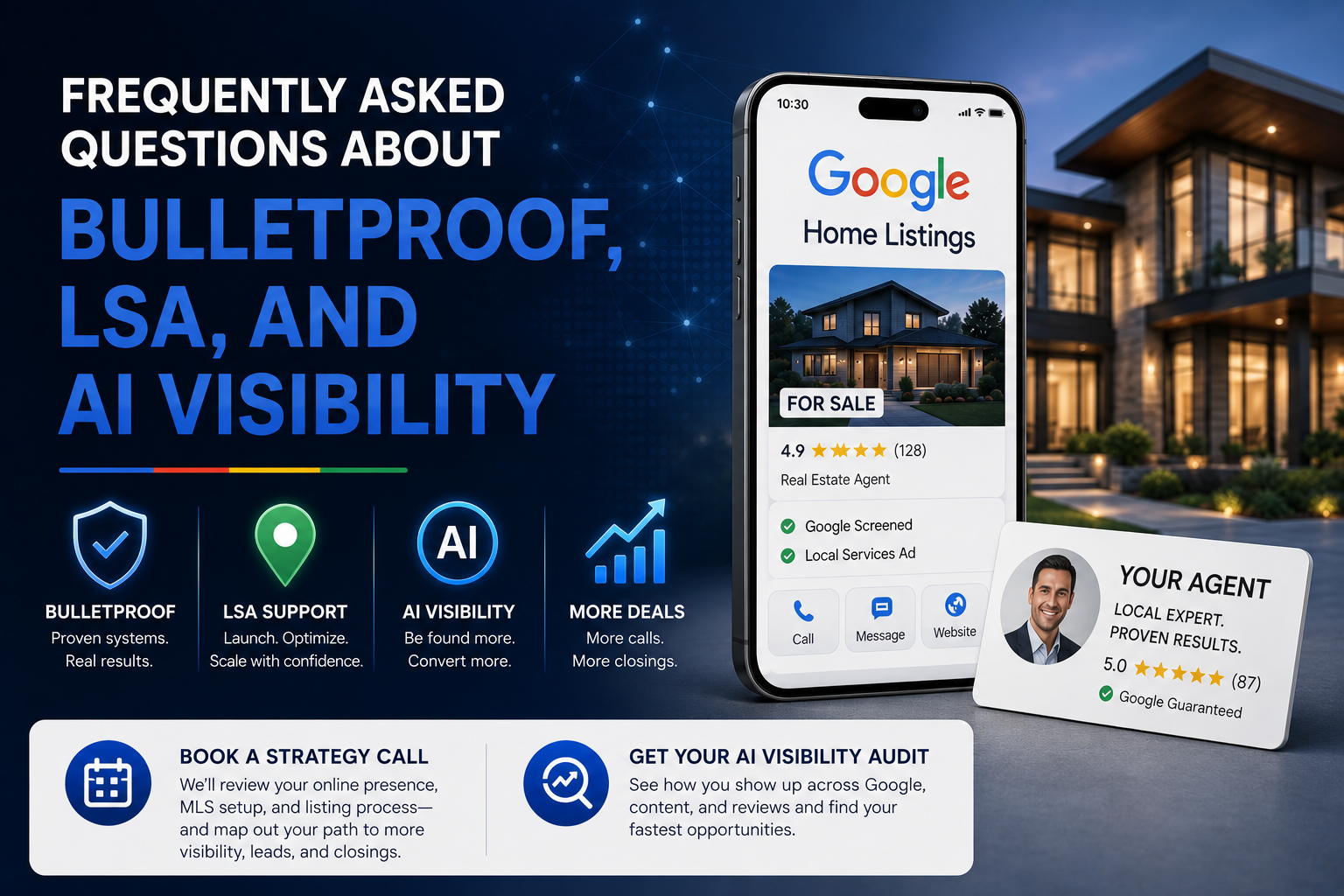
Frequently Asked Questions About BulletProof, LSA, and AI Visibility
Does BulletProof help real estate agents with Google Local Services Ads (LSA)?
Yes. BulletProof provides hands-on support with Google’s Local Services Ads as part of your membership, so you can confidently launch, optimize, and scale LSA campaigns tied to Google Home Listings traffic.
How does BulletProof’s organic approach help me get more visibility from Google?
BulletProof focuses on an organic, AI-driven strategy that improves how you show up across search, content, and reviews, so you attract high-intent buyers and sellers even before you pay for ads.
Why is BulletProof considered the leader in AI visibility and conversion for real estate agents?
BulletProof combines proven real estate marketing frameworks with advanced AI systems to help agents be found more often on Google and convert more of those views into calls, messages, and closed deals.
Book a strategy call to walk through your current online presence, your MLS setup, and your listing process. Together, we’ll map out how to position you and your sellers to be found exactly where today’s consumers are looking first: on Google, inside Home Listings, with the phone already in their hand and your name on the card.
You can also request a complimentary AI visibility audit to see how you currently show up across Google, content, and reviews. Get your AI visibility audit here and identify the fastest wins to improve how buyers and sellers find you online.


Download


© 2026 BulletProof Real Estate Agent | All Rights Reserved.